Address
California
Work Hours
Monday to Friday: 7AM - 7PM
Weekend: 10AM - 5PM
Address
California
Work Hours
Monday to Friday: 7AM - 7PM
Weekend: 10AM - 5PM
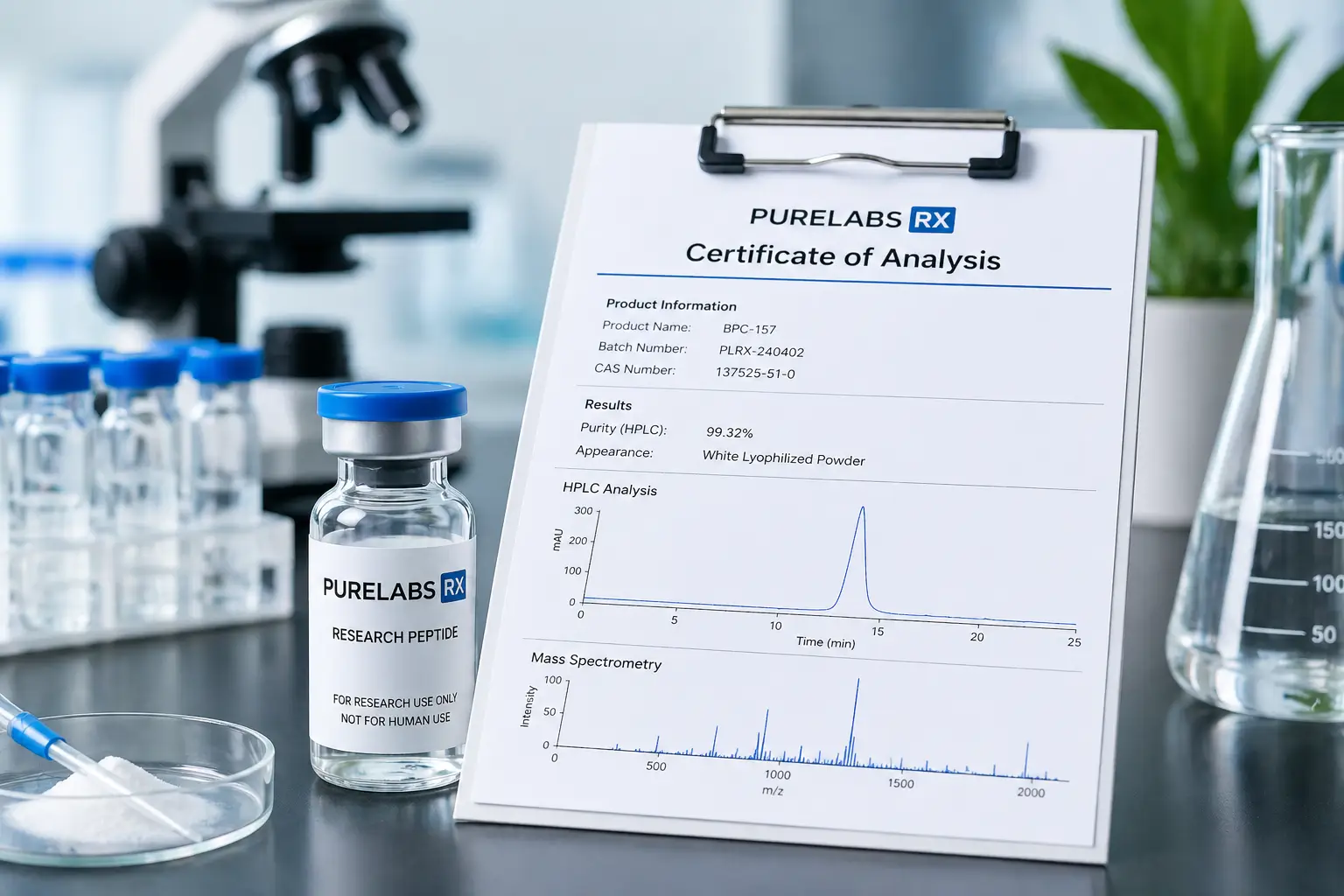
When picking peptides for a project, one of the top things you need to keep an eye out for is the product quality – and that starts with getting a handle on what a Certificate of Analysis (COA) actually is.
Understanding a peptide COA is pretty key, as it helps researchers and labs confidently pick materials they can trust.
A Certificate of Analysis is basically a document that a supplier gives you that confirms their product has been put through the wringer in terms of testing before they sell it to you – it’s a guarantee that their product has had some level of analysis done before it left the lab.
When you’re reviewing a COA, there are a few things you need to take a close look at:
This is basically a measure of what percent of the compound you’re buying is actually the stuff you want – in other words, it’s a measure of how pure the peptide is.
High-Performance Liquid Chromatography (HPLC) is one of the most common ways to measure the purity of a peptide – it’s like a quality control check to make sure it’s what you asked for.
Mass spectrometry is another way to check for molecular weight and structure – it’s like a way of verifying the peptide’s molecular identity.
Each COA should have a batch number, which is like a serial number that helps you keep track of where each order came from.
Always double-check when the test was performed – if the data is old, it may not be relevant to your research.
Verifying a COA is important because it ensures that you get reliable research results – and that you can trust the quality of the compounds you’re working with.
Without verifying a COA, it becomes way harder to figure out whether or not the integrity of your research materials is intact.
When you’re picking a supplier, there are a few things you should look for:
For example, something as simple as a water reconstitution product like BAC Water should always come with some level of documentation and quality assurance standards.
A properly verified COA is basically the foundation of high-quality research peptides – it helps you figure out whether or not the peptides you’re buying are actually going to get the job done.