Address
California
Work Hours
Monday to Friday: 7AM - 7PM
Weekend: 10AM - 5PM
Address
California
Work Hours
Monday to Friday: 7AM - 7PM
Weekend: 10AM - 5PM

Finding a reliable research peptide supplier can be difficult, especially with the growing number of online vendors entering the market. Some suppliers focus heavily on marketing while offering very little transparency about product quality, testing standards, or storage practices.
For many researchers, those details can make a significant difference.
Whether you’re sourcing compounds like BPC-157, TB-500, CJC-1295, or GHK-Cu, consistency and verification are often just as important as availability. Improper handling or inconsistent product quality can affect research consistency over time, which is why many researchers now spend more time evaluating suppliers before placing an order.
In this guide, we’ll look at some of the most important factors researchers commonly consider when choosing a peptide supplier in the United States.
Disclaimer: All compounds mentioned in this article are intended strictly for laboratory and research purposes only. They are not approved for human consumption.
Research peptides are highly sensitive compounds. Their stability can be affected by contamination, moisture, improper storage, or inconsistent manufacturing practices.
Because of this, experienced researchers usually look beyond pricing alone. A lower price may not mean much if the product lacks proper testing or arrives with poor packaging standards.
Reliable suppliers typically focus on:
These factors help researchers maintain more consistent laboratory conditions and reduce uncertainty when working with sensitive compounds.
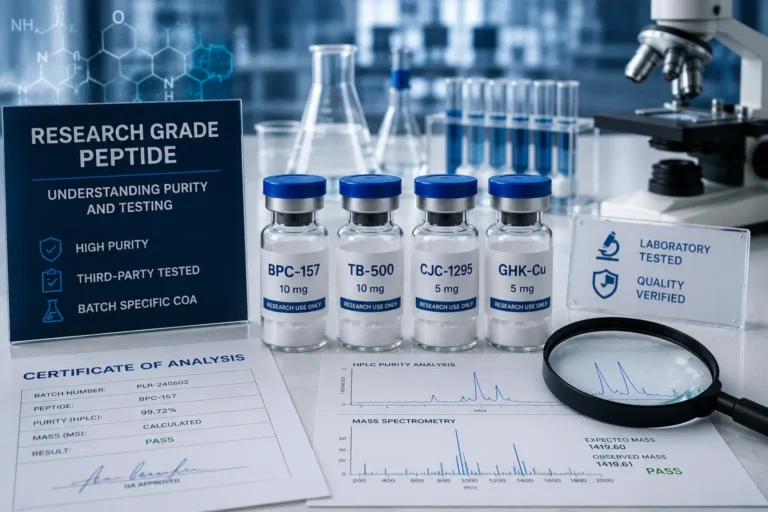
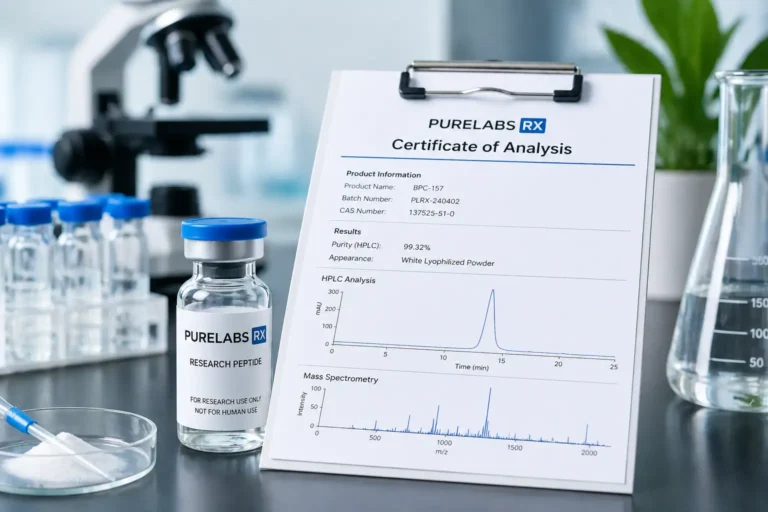
One of the first things many researchers check is whether the supplier provides a Certificate of Analysis (COA).
A COA usually contains information such as:
This documentation helps verify that the material has been tested and matches the labeled compound.
For peptides like:
COA verification is often considered a basic requirement rather than an optional feature.
Suppliers that openly provide testing information generally create more confidence than those offering little or no product verification.
Many researchers prefer suppliers that use independent third-party testing rather than relying entirely on internal testing claims.
Two testing methods commonly referenced in the peptide industry are:
These methods help confirm:
Third-party testing adds another layer of transparency and can help researchers make more informed purchasing decisions.
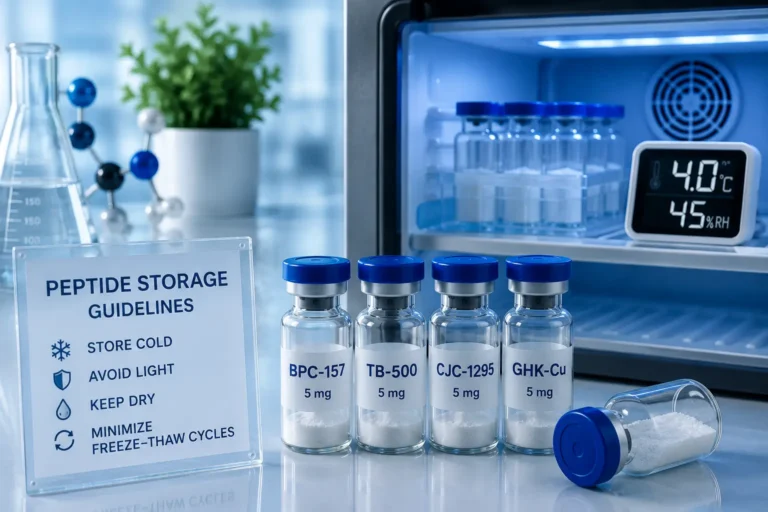
Peptides are temperature-sensitive compounds, so packaging and storage practices matter more than many new buyers realize.
Most research peptides are shipped in lyophilized (freeze-dried) form because it helps improve stability during storage and transport.
Researchers often look for:
Even high-purity compounds can become less stable if handled improperly during shipping or storage.
Before ordering from a supplier, many researchers spend time reviewing:
A trustworthy supplier typically provides clear information about:
While online reviews should always be viewed carefully, consistent feedback regarding packaging, communication, and testing transparency can still provide useful insight.
One common issue in the peptide space is overly aggressive marketing.
Reliable research suppliers usually avoid:
Instead, established suppliers generally position their products strictly for:
Clear “research use only” labeling is often a positive sign that the supplier is trying to operate responsibly within industry guidelines.
Many peptide suppliers offer a wide range of compounds, but some products continue appearing more frequently in laboratory research discussions.
These include:
As interest in peptide research continues growing, researchers are paying closer attention to supplier quality, consistency, and testing transparency before sourcing these compounds.
For US-based researchers, shipping reliability can also be an important factor.
Researchers often prefer suppliers that offer:
Delays or poor packaging conditions can affect sensitive materials, especially during warmer months or long transit times.
Choosing a research peptide supplier involves more than simply comparing prices. Product verification, transparency, storage standards, and testing practices all play an important role in evaluating overall supplier reliability.
Whether researching compounds such as BPC-157, TB-500, CJC-1295, GHK-Cu, or NAD+, taking time to review supplier documentation and quality standards can help support more consistent laboratory work.
As interest in peptide research continues growing, researchers are becoming more selective about where they source laboratory compounds — and for good reason.
A Certificate of Analysis (COA) is a laboratory document that provides information about purity, batch testing, and compound verification.
Third-party testing helps independently verify purity and molecular identity, providing additional transparency for researchers.
Lyophilized peptides are freeze-dried to help improve stability during storage and shipping.
Researchers commonly evaluate testing standards, COA availability, storage practices, shipping reliability, and supplier transparency.
The compounds discussed in this article are intended strictly for laboratory and research purposes only and are not approved for human consumption.