Address
California
Work Hours
Monday to Friday: 7AM - 7PM
Weekend: 10AM - 5PM
Address
California
Work Hours
Monday to Friday: 7AM - 7PM
Weekend: 10AM - 5PM
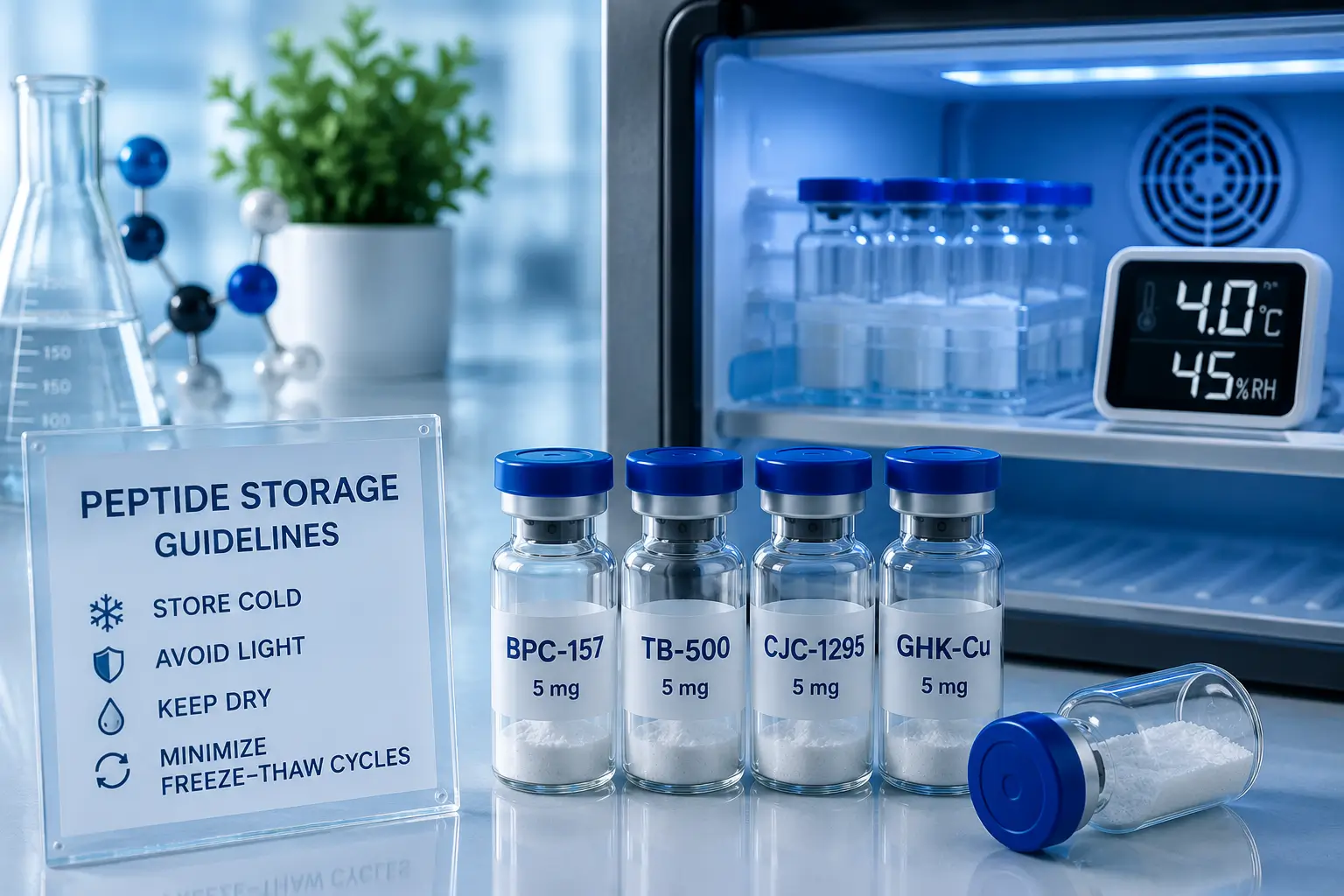
Proper peptide storage is one of the most overlooked parts of laboratory research. Even high-purity compounds can lose stability over time if they are exposed to moisture, heat, repeated temperature changes, or improper handling conditions.
Because research peptides are sensitive materials, storage practices can play an important role in maintaining consistency during laboratory work.
Whether researchers are working with compounds like BPC-157, TB-500, CJC-1295, Ipamorelin, or GHK-Cu, understanding basic storage principles can help reduce degradation risks and improve long-term stability.
This guide covers common peptide storage recommendations used in research environments and explains why handling conditions matter.
Disclaimer: All compounds mentioned in this article are intended strictly for laboratory and research purposes only. They are not approved for human consumption.
Research peptides are made up of amino acid chains that can gradually break down under unfavorable conditions.
Several factors may affect peptide stability over time, including:
When peptides degrade, research consistency may become less reliable. This is one reason many researchers prioritize proper storage practices immediately after receiving laboratory compounds.
Most research peptides are supplied in lyophilized form, also known as freeze-dried powder.
Lyophilization helps improve:
In their dry state, peptides are generally more stable than reconstituted solutions. Because of this, many suppliers ship peptides as sealed lyophilized vials.
Researchers commonly keep lyophilized peptides refrigerated or frozen depending on expected storage duration.
Storage recommendations may vary slightly depending on the compound and research timeline, but general guidelines often include:
For short-term use, many researchers refrigerate peptides at:
This may help maintain stability for shorter research periods.
For longer storage durations, researchers often keep lyophilized peptides frozen at:
Freezing may help slow degradation and preserve peptide integrity over extended periods.
One common recommendation in peptide handling is minimizing repeated freeze-thaw exposure.
Frequent temperature fluctuations may affect peptide stability over time.
To reduce this risk, some researchers:
This approach may help maintain more consistent handling conditions during laboratory work.
Once peptides are reconstituted, they generally become more sensitive to environmental exposure.
Researchers commonly use:
Many reconstituted peptides are stored in refrigeration rather than at room temperature.
Storage duration after reconstitution may vary depending on:
Because stability can differ between compounds, researchers often review supplier recommendations before use.
Moisture and direct UV exposure can negatively affect peptide stability.
Researchers typically store peptides:
Leaving peptide vials exposed to humidity or heat for extended periods may increase degradation risk.
In laboratory environments, organization can be just as important as storage temperature.
Researchers often label peptide vials with:
Clear labeling helps reduce confusion and improves research consistency over time.
Many research compounds benefit from stable storage practices, including:
As peptide research continues growing, proper handling practices remain an important part of maintaining product quality.
Proper peptide storage is an important part of maintaining research consistency and protecting compound stability over time.
Temperature control, moisture protection, sterile handling practices, and minimizing repeated freeze-thaw cycles are all common recommendations in research environments.
Whether working with BPC-157, TB-500, CJC-1295, GHK-Cu, or other laboratory compounds, following basic storage guidelines can help researchers maintain more reliable handling conditions throughout their work.
Many researchers refrigerate peptides for short-term storage and freeze lyophilized peptides for longer-term stability.
Lyophilized peptides are freeze-dried to improve stability during storage and transportation.
Extended exposure to heat may affect peptide stability and increase degradation risk over time.
Repeated temperature fluctuations may reduce peptide stability and consistency.
The compounds discussed in this article are intended strictly for laboratory and research purposes only and are not approved for human consumption.