Address
California
Work Hours
Monday to Friday: 7AM - 7PM
Weekend: 10AM - 5PM
Address
California
Work Hours
Monday to Friday: 7AM - 7PM
Weekend: 10AM - 5PM
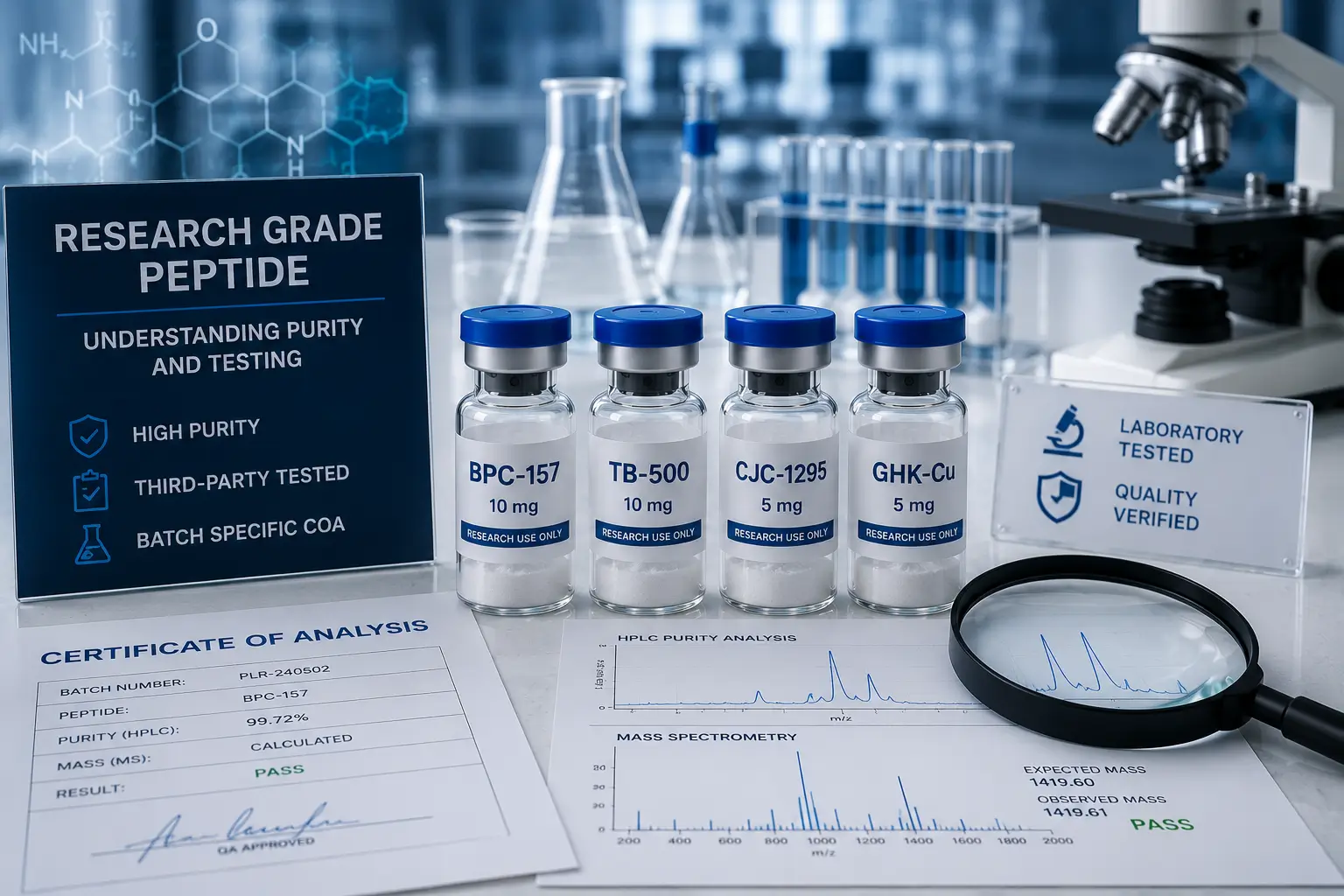
The term “research grade peptide” appears frequently throughout the peptide industry, but many newer researchers are unsure what it actually means.
When suppliers describe peptides as research grade, they are usually referring to compounds intended for laboratory and scientific research purposes rather than pharmaceutical or clinical use.
However, not all research peptides are manufactured or tested to the same standards. This is why researchers often spend time reviewing purity levels, testing methods, and supplier transparency before purchasing laboratory compounds.
In this article, we’ll explain what research grade peptides are, how purity testing works, and why verification standards matter in peptide research.
Disclaimer: All compounds mentioned in this article are intended strictly for laboratory and research purposes only. They are not approved for human consumption.
Research grade peptides are compounds intended for:
These products are typically labeled for research use only and are not approved for human consumption.
The phrase “research grade” generally indicates that the compound is being sold for laboratory purposes rather than therapeutic or pharmaceutical applications.
Purity is one of the most important factors researchers evaluate when sourcing peptides.
Low-purity compounds may contain:
These issues can potentially affect laboratory consistency and research outcomes.
For this reason, researchers often prioritize suppliers that provide:
Two testing methods commonly used in peptide analysis are:
HPLC is frequently used to analyze peptide purity levels by separating compound components during laboratory testing.
Researchers often review HPLC reports to confirm:
Mass spectrometry helps verify molecular identity and molecular weight.
This testing method may help confirm whether the compound matches the intended peptide structure.
Together, HPLC and MS testing provide additional transparency for researchers evaluating laboratory compounds.
A Certificate of Analysis, commonly called a COA, is a laboratory document that provides information about:
Researchers frequently review COAs before purchasing peptides such as:
A supplier that openly provides batch-specific COAs is often viewed as more transparent than suppliers offering little testing documentation.
Many newer buyers confuse research grade with pharmaceutical grade, but they are not the same.
Research grade peptides are intended for:
Pharmaceutical-grade compounds follow entirely different regulatory and manufacturing standards associated with approved medical applications.
Reliable research suppliers generally avoid presenting research peptides as pharmaceutical products.
In the growing peptide industry, transparency has become increasingly important.
Researchers often evaluate suppliers based on:
Established suppliers typically maintain clear “research use only” positioning throughout product listings and educational content.
Some of the most commonly discussed research compounds include:
As peptide research continues expanding, researchers are paying closer attention to quality verification and supplier standards before sourcing these compounds.
Research grade peptides are laboratory compounds intended for scientific and educational research purposes. Because product quality can vary significantly between suppliers, many researchers prioritize purity testing, COA verification, and supplier transparency before making purchasing decisions.
Understanding how peptides are tested and labeled can help researchers make more informed decisions when evaluating compounds such as BPC-157, TB-500, CJC-1295, GHK-Cu, and other research materials.
As always, research peptides should only be handled in controlled laboratory environments and used according to applicable research regulations and safety standards.
Research grade peptides are compounds intended for laboratory and scientific research purposes only.
HPLC testing is commonly used to analyze peptide purity and identify impurities within a sample.
Certificates of Analysis provide testing details, purity information, and batch verification for research compounds.
No. Research grade peptides are intended for laboratory use and are not classified as pharmaceutical-grade products.
The compounds discussed in this article are intended strictly for laboratory and research purposes only and are not approved for human consumption.